
The Pelicot case demonstrates once again how widespread sexual violence remains throughout society. Media coverage of this and other rape trials should reflect this reality.
The harrowing revelations of sustained sexual violence, carried out and coordinated by Dominique Pelicot against his wife, Gisèle, has been a moment of reckoning with rape culture in France and beyond.
With 50 men on trial for rape, but an estimated 90 perpetrators in total, the case suggests that a significant proportion of men in any given area are capable of committing such sexual violence or being complicit in it. The events attest to a general expectation of impunity among perpetrators, a behaviour they could evidently justify to themselves, and further evidence of entrenched misogyny and the prevalence of rape in society.
The case demonstrates, as the feminist activist and graphic novelist Blanche Sabbah put it in a fitting paraphrase of Arendt, “the banality of sexual violence.” Observing this banality confronts us yet again with the inescapable nature of rape culture and the need to tackle it.
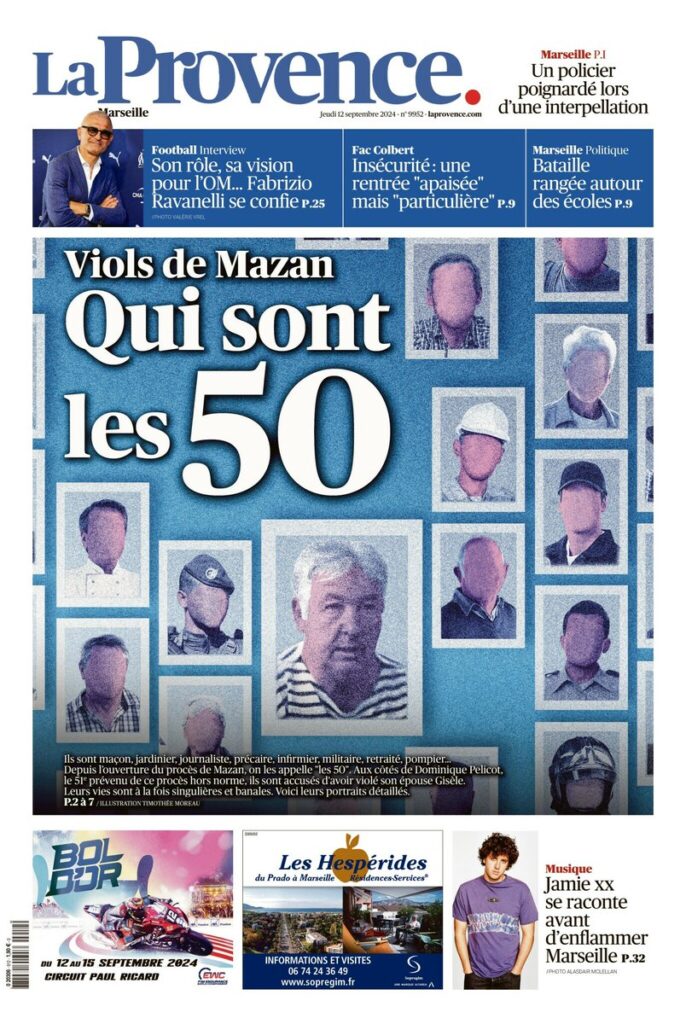
These were ordinary family men, well integrated, from all walks of life and of all ages. Their varied profiles belie the assumption that sexual violence is an exceptional act committed by a tiny number of rogue men. They are at odds with the figure of the “violent stranger”, the sexual deviant, or the menacing illegal immigrant. Yet these tropes continue to be reinforced in media reporting of rape, according a report released at the end of September by the End Violence Against Women Coalition (EVAW) titled Reporting on Rape: Changing the Narrative. The report reminds us that the vast majority of rapes are carried out by perpetrators known to their victims and take place without additional physical violence. Despite these often repeated facts, journalists continue to use descriptions that emphasise the use of violence, reinforcing these myths.
Monsters do not exist
“Monsters do not exist”, is how actress Adele Haenel put it, in a 2019 interview with Mediapart, speaking out about her own experiences in the context of broader “Me too” revelations in French cinema. “It’s our society, it’s us, it’s our friends, our fathers”. Haenel stressed that rather than excluding or stigmatising individuals, it was necessary to create change by addressing the collective responsibility that allows this sexual violence to remain so widespread.
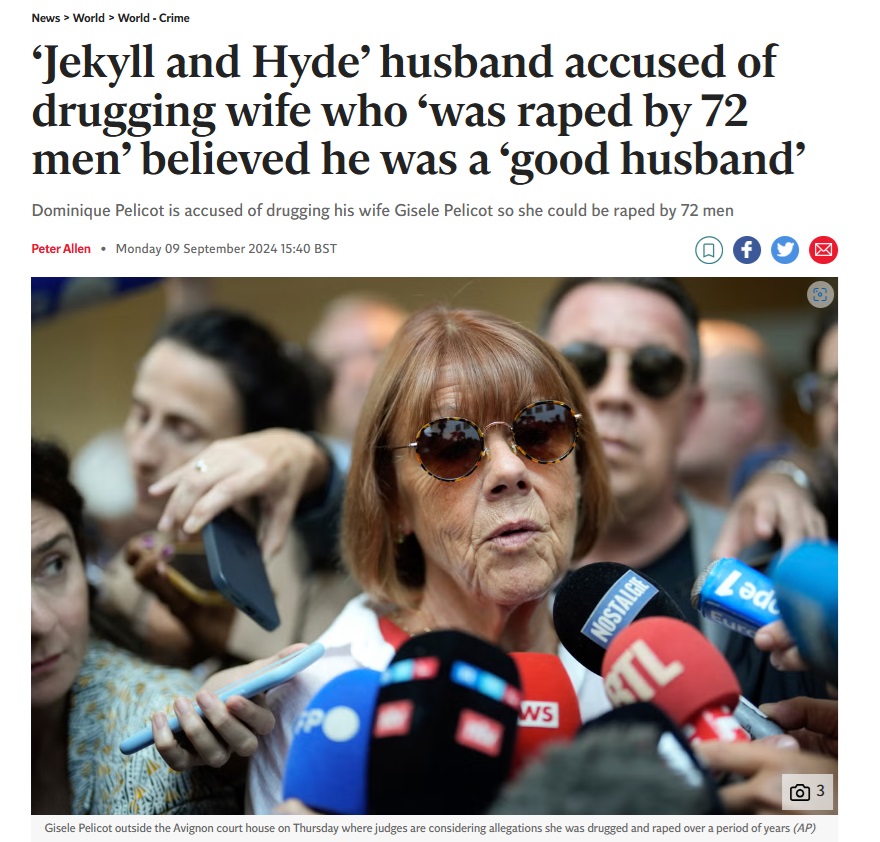
These appeals and this evidence were not sufficient to prevent some publications, tabloid media in particular, running with headlines about the Monster of Mazan, or referring to a Jekyll and Hyde persona as the only way to make sense of an outwardly exemplary citizen committing such acts.
How, then, ought we to speak of those who commit this violence?
Many of the recommendations to journalists on how to cover gender-based violence focus largely on how to describe the victims rather than the perpetrators, aside from providing general “presumption of innocence until proven guilty” advice.
Among the recommendations of the EVAW report are:
- Don’t invisibilise the perpetrator by using gender-neutral language or the passive voice when not necessary
- Instead of star, ace or champion, use a neutral description of the perpetrator’s profession or just their name
- Avoid disproportionate focus on the perpetrator’s defence.
The question of whether or not, or to what extent, to identify the accused led to some tricky dilemmas and tough editorial choices to determine if naming the individuals was in the public interest. Some publications opted for partial anonimisation, largely motivated by concern to protect their families, while others identified them more fully. As one editor-in-chief put it: “Naming does not mean going against the presumption of innocence.” Whatever the editorial choice, it is crucial to be transparent about the reasons behind it, to avoid falling into formulations that serve to reproduce bias against the victims.
To dismantle myths and received ideas about rape, a broader shift is needed: towards an understanding that this violence is systemic. As EVAW’s report notes, at present, “these men’s crimes are not seen as an issue of the system they operate in – a system that protects them – but as an issue linked to their ‘deviance’, with narratives that wrongly assert that if they are removed, the problem is removed, with no need for substantial or systemic change.” As the feminist campaigner Emma Rainey put it succinctly in a tweet: “Male violence against women is not instances of randomized behaviour, it is systematic and reproduced behaviour.” If shame is truly to switch sides, media coverage must reflect this reality.
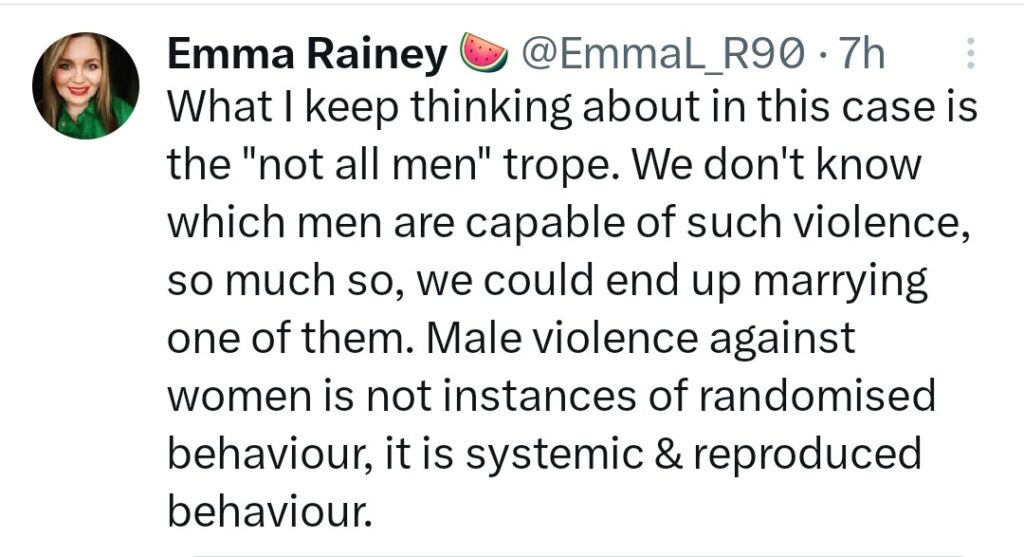
Image by Richard Harvey via Flickr, licence CC BY-NC 2.0
Leave a Reply